
 Team Edumarshal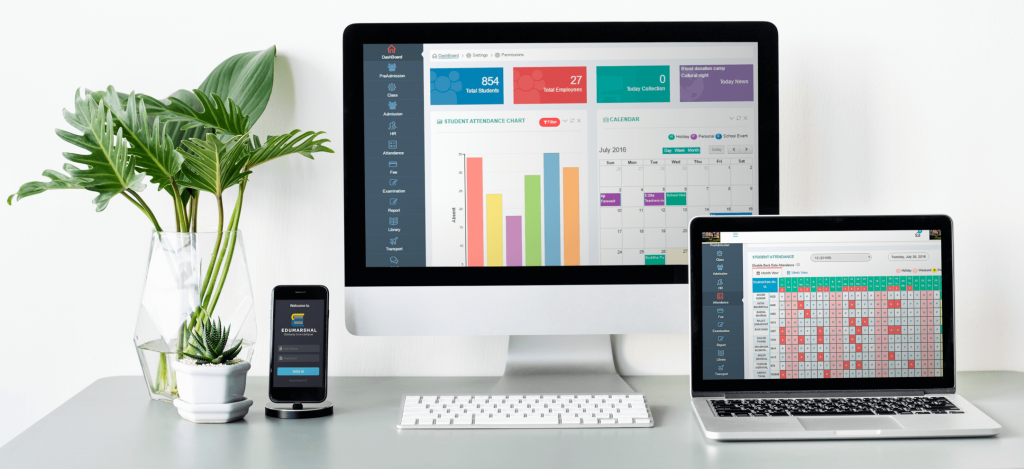
Gradually, educational institutions are adopting School ERP software to ease up their operations and increase efficiency. But with so many options on the market, one should at least know some vital features of a good School ERP system to make informed decisions. Here is an in-depth overview of the critical features that current School ERP software has to offer.
1. Centralized Student Information Management.
An excel way for an ERP system is to keep all data pertaining to students, including personal information, academic records, attendance, and discipline history, centralized solidly, as such ensures the correctness of this data while easily providing access to administrators, teachers, and parents.
2. Automated Attendance Tracking
Carrying out attendance manually is time-consuming and laden with errors. School ERP automates attendance with teachers marking attendance via software. It could integrate with bio-metric or RFID systems facilitating accurate records.
ERP software tracks library books, laboratory equipment, and other resources to ensure all resources are optimally consumed, and there is a timely replenishment of those.
3. Online Fee Management
Fee collection and management become easier by way of ERP solutions. Automated reminders, online payment gateway and detailed fee statements lessen administrative load while increasing financial transparency.
4. Parent-Teacher Communication Tools
Most ERP software has a communication module within it to make it easier for parents and teachers to communicate. Instant messaging, notifications, and progress reports help ensure that parents are forever informed about their child’s academic journey.
5. Timetable and Scheduling Management
Dynamic scheduling is one of the active features of school ERP systems. This includes the generation of a timetable, allocation of a classroom to each subject, and teacher substitution. This could substantially reduce the conflicts in scheduling and make full use of resources.
6. Academic Performance Tracking
Analysis integrated into ERP systems provides comprehensive student performance reports useful for tracking by both teachers and administrators in identifying trends, bridging learning gaps, and facilitating appropriate interventions.
7. Library and Inventory Management
Successful resource management is highly essential for all institutions. ERP software tracks library books, laboratory equipment, and other resources to ensure all resources are optimally consumed, and there is a timely replenishment of those.
8. Multi-User Accessibility
A solid ERP system will serve multiple stakeholders administrators, teachers, students, and parents to access relevant information based on ones roles. Such a practice would be ideal to create security, and efficiency in usage.
9. Mobile App Integration
Modern day ERP solutions come with mobile app capabilities, so that access is not restricted within the four walls. Notifications, fee payments, settlements and academic updates become much easier to avail through mobile interfaces.
10. Customizable Modules
No two schools operate the same way, so customization is critical. ERP software with modular designs allows institutions to choose and configure features based on their unique requirements.
School ERP software is no longer a luxury but a necessity for modern educational institutions. From simplifying administrative tasks to fostering better communication, the right features can revolutionize how schools operate.
Before choosing a system, evaluate your school’s specific needs and ensure the software includes these essential features. A well-implemented ERP system can be the foundation for a smarter, more efficient school.